 Por
Por 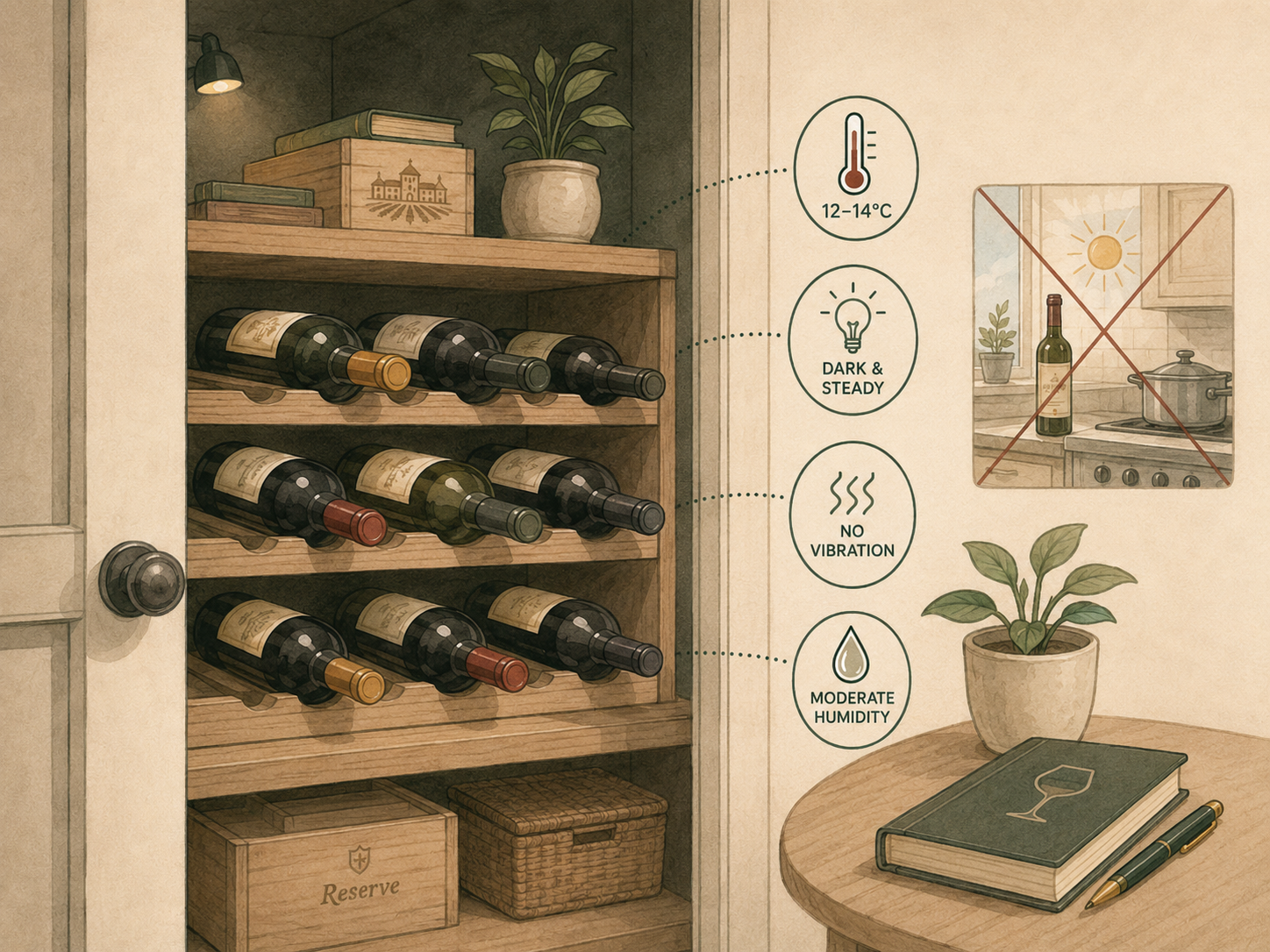
Most home storage problems come from change. Wine dislikes heat, but it especially dislikes being warmed, cooled, warmed again, and cooled again. A steady spot is usually safer than a prettier spot with big swings.
Heat pushes wine forward too fast. It can flatten fruit, dry out freshness, and make a bottle taste older than it is. Kitchens are often bad because ovens, sunlight, and daily activity create temperature movement. Garages can be worse because they follow the seasons. A hallway closet, interior cabinet, basement corner, or wine fridge is usually more useful than a rack above the refrigerator.
Light matters too. Strong light can damage delicate wines and make bottles age unevenly, especially clear or pale glass. Keep bottles away from sunny windows and bright display shelves. Darkness is not glamorous, but it works.
Vibration is less dramatic than heat, but it is still worth avoiding. Wine with sediment should rest. Bottles do not need to live beside speakers, laundry machines, or a cabinet door that gets slammed all day.
Humidity matters most for natural corks. A very dry place can encourage corks to dry and shrink over long periods. Screwcap bottles remove that cork concern, but they still need steady temperature and darkness.
The practical question is not, "Is this a perfect cellar?" It is, "Is this stable, cool enough, dark, and out of the way?" A boring closet often beats a beautiful rack. Wine does not care where it looks best. It cares where it changes slowest.
What you should know after this lesson
After this lesson you should be able to choose a safe home storage spot by prioritizing stability, darkness, moderate coolness, and low disturbance.