 Por
Por 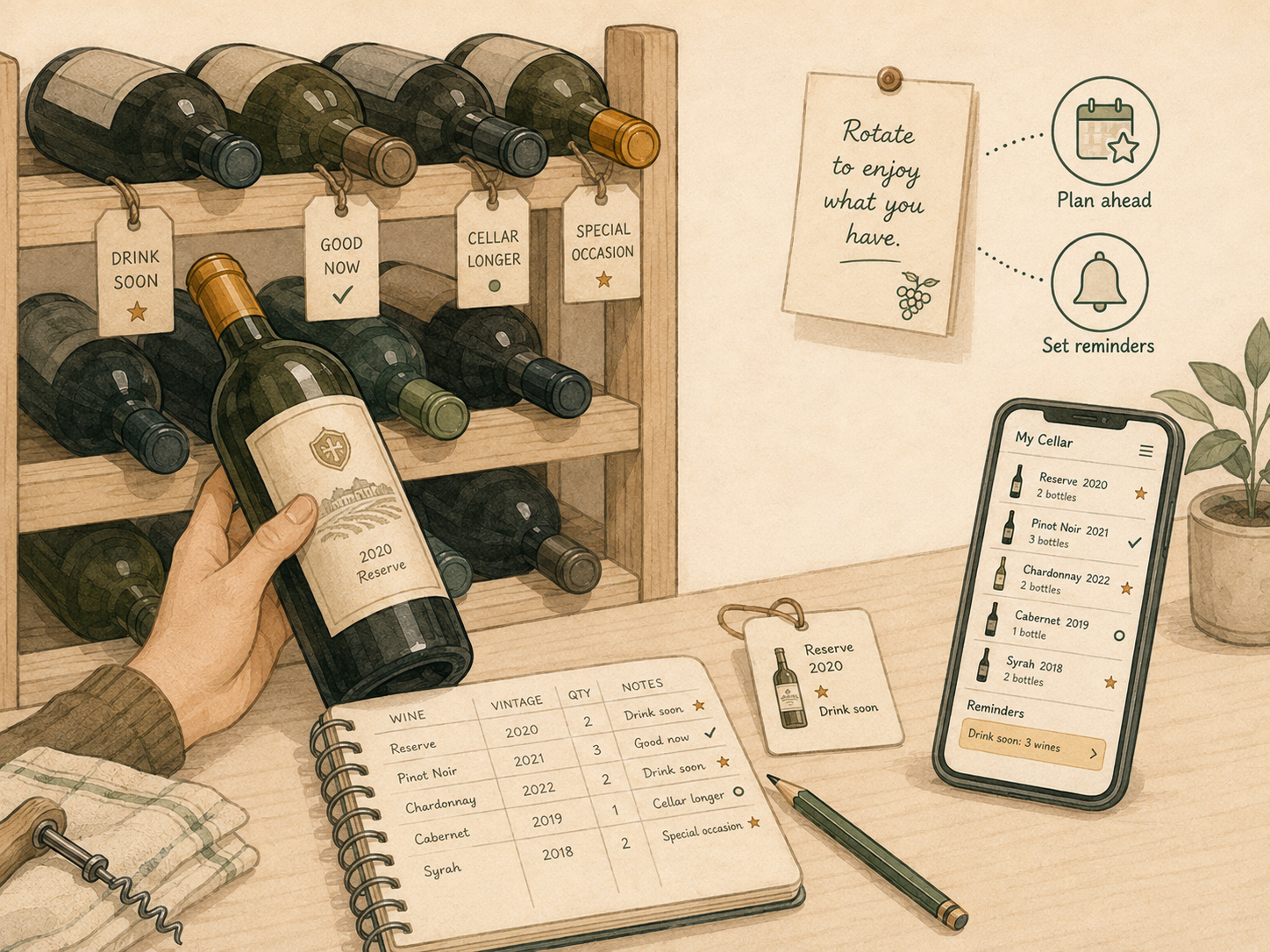
A collection without an inventory is just a hiding place for bottles you once meant to drink. That sounds harmless until you find a wine years after its best moment and realize you saved it into decline.
The tool does not need to be fancy. CellarTracker is useful because it is built for wine, but a spreadsheet works. A notebook works if you actually use it. The best system is the one you will update when a bottle arrives and when a bottle leaves.
Track the basics: producer, wine name, vintage, quantity, where it is stored, purchase date, price if useful, and a rough drink-by note. Add the reason you bought it if that helps. "For roast chicken," "open with Dad," or "try one every two years" is more useful than pretending every bottle is a museum object.
Rotation matters because different bottles have different jobs. Some are weeknight bottles. Some are near-term bottles that should be opened before the fruit fades. Some are long-haul bottles that need patience. If all of them disappear into the same pile, the easy bottles get ignored and the special bottles become too special to open.
First in, first out works for everyday wine. For cellar wine, use a softer rule: oldest risk first. Check bottles closest to their window, especially whites, rosés, lighter reds, and anything stored outside ideal conditions. Set reminders if your system allows it.
Knowing what you have changes how you drink. You stop buying the same thing by accident. You open with better timing. A cellar is not a trophy case. It is a pantry with memory.
What you should know after this lesson
After this lesson you should be able to manage a small cellar with a simple inventory, drink-by reminders, and rotation habits that prevent forgotten bottles.