 Por
Por 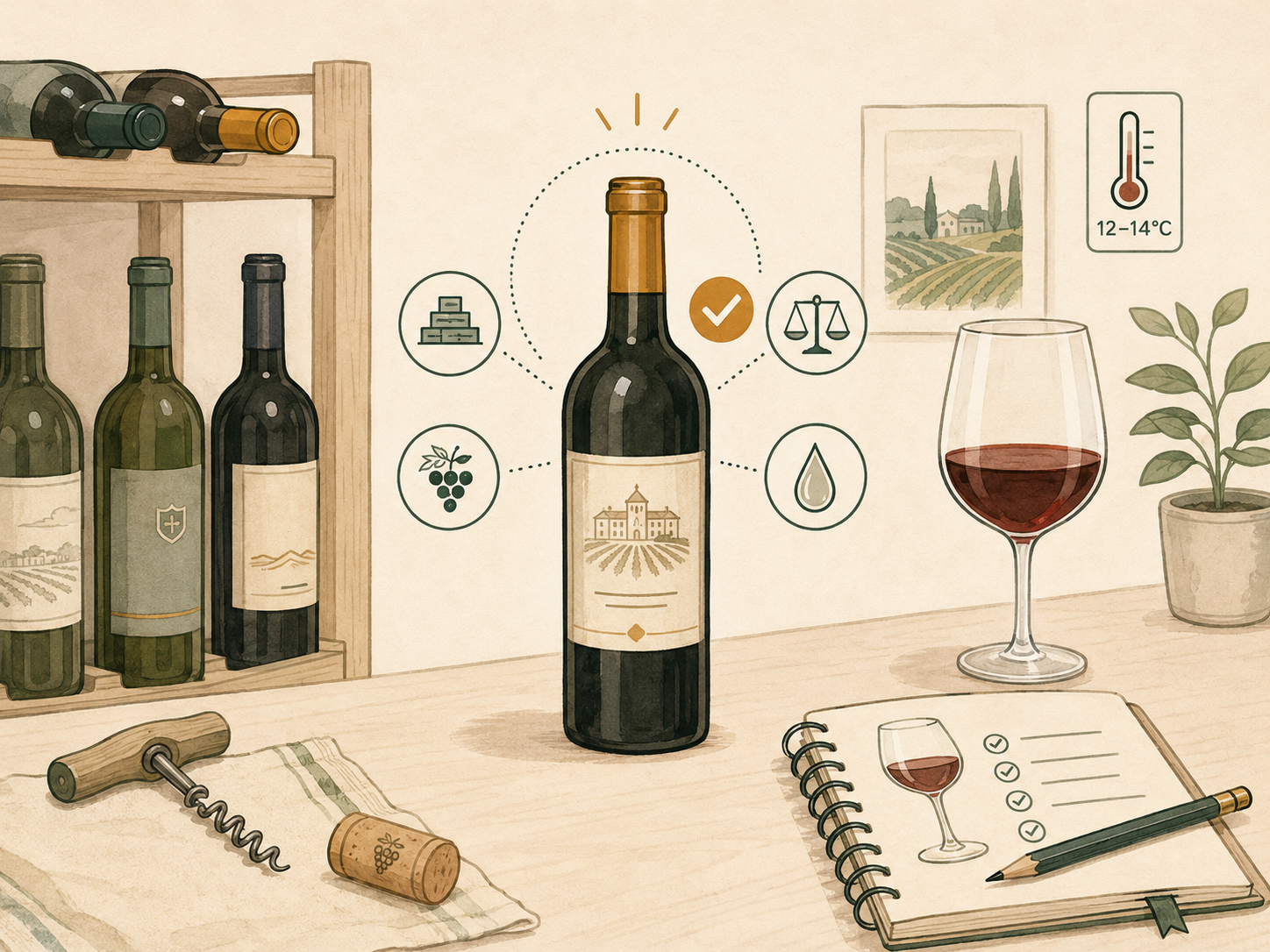
Most wine is not waiting for a grand future. It is ready when you buy it, or close to it. Fresh whites, rosés, light reds, and everyday bottles usually give you their best fruit early. Keeping them for years may not make them deeper. It may only make them tired.
A wine worth keeping needs a reason to survive the wait. Acid is one reason. It keeps the wine fresh and gives it a line through time. Tannin is another, especially in reds such as Cabernet Sauvignon, Nebbiolo, Syrah, Tempranillo, Sangiovese, and Aglianico. Sugar can preserve sweet wines when it has enough acid behind it. Alcohol helps explain why fortified wines such as Vintage Port and Madeira can last so long.
None of those traits works alone. A tannic wine with weak fruit can become dry and hollow. A sharp white without concentration can turn thin. A sweet wine without freshness can feel heavy. Oak can frame a wine, but oak flavor is not the same thing as ageworthiness.
Balance is the clue. A young cellar wine may be firm, bright, or even a little closed, but it should still feel complete. There should be fruit, structure, and enough depth to imagine change. If the wine already feels hot, empty, or awkward, time is not a repair shop.
The safest move is to age wines with a track record and a clear structural reason. Keep the bottle because patience may reveal something, not because opening it young feels unsophisticated.
What you should know after this lesson
After this lesson you should be able to judge whether a bottle is worth keeping by looking for structure, concentration, balance, and a real reason to improve.