 Por
Por 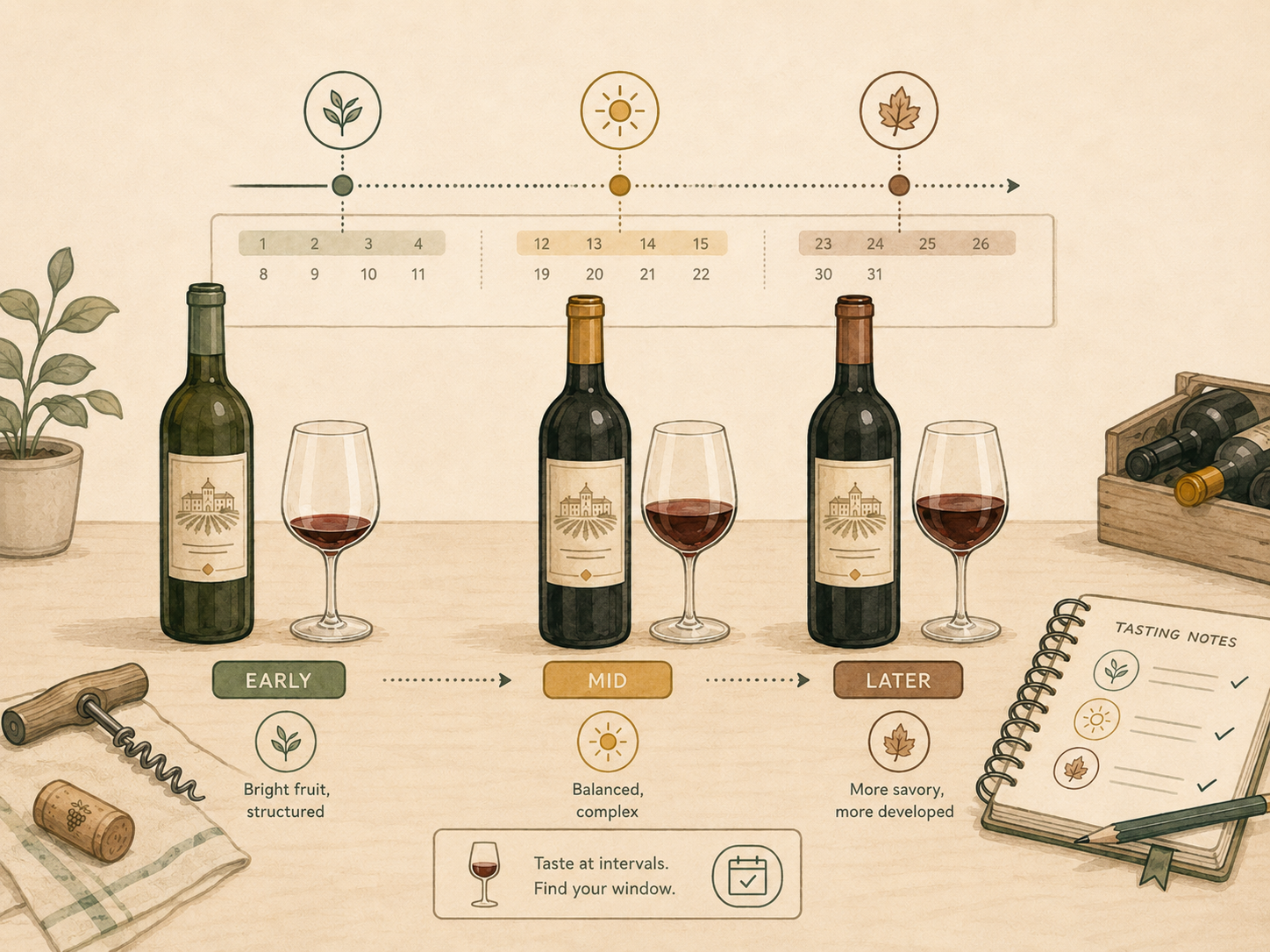
A drinking window looks more precise than it is. "Drink 2028–2040" sounds like someone knows the exact future. They do not. They are making an informed guess about how the wine is likely to change under good storage.
The guess can still help. It tells you whether a wine is meant for early drinking, middle-term aging, or long cellaring. It can warn you not to open a tight young bottle too soon. It can also remind you that wine does not live forever. But a window is a range, not a command.
Producer guidance usually matters more than a critic's line because the producer knows the vineyard, style, and intent. Vintage matters too. A warm year may give riper fruit and softer acid. A cool year may give more freshness and less weight. Rain, drought, frost, hail, and harvest weather all shape how a bottle ages. The same wine can have different timelines in different years.
Your taste matters most. Some drinkers love primary fruit. Others want leather, dried fruit, mushroom, nuts, honey, and savory development. Neither person is wrong. They are just standing at different points on the curve.
The best home method is simple. When the wine is important and affordable, buy three to six bottles. Open one early to set the baseline. Open another when the window begins. Save one for later. Take short notes, even if the note is only "too young," "perfect," or "slipping."
A drinking window is not there to make you obedient. It is there to help you listen. The right window is the one where you enjoyed the wine most.
What you should know after this lesson
After this lesson you should be able to use drinking windows as flexible guidance while building your own sense of when a bottle tastes best.