 Por
Por 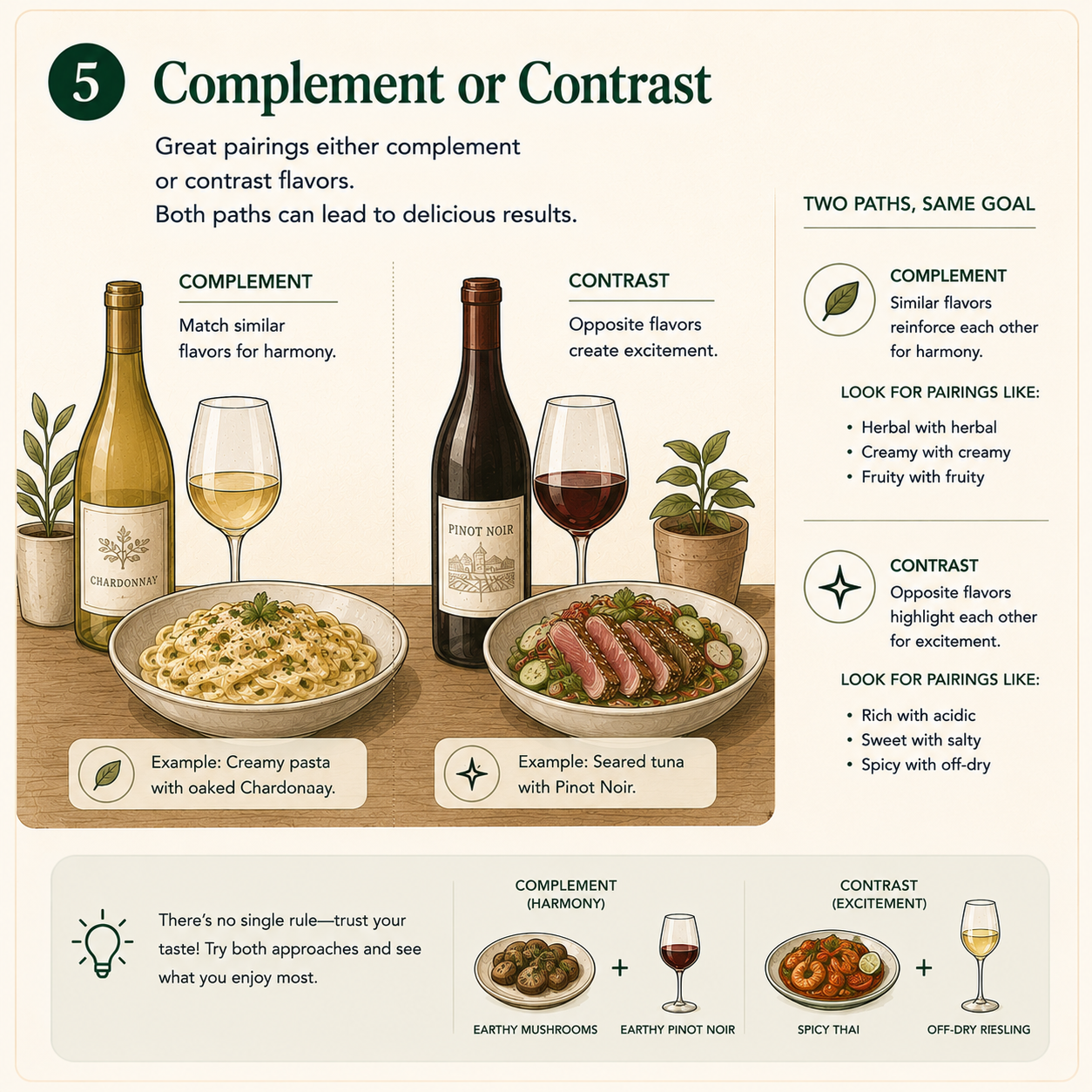
There are two honest ways to pair: complement or contrast.
Complement means the wine moves in the same direction as the food. A buttery Chardonnay with roast chicken and cream sauce is a complement. A smoky Syrah with grilled lamb is a complement. A nutty oxidative white with aged cheese is a complement. The pleasure comes from agreement. The risk is heaviness. If everything is rich, soft, and warm, the table can get tired quickly.
Contrast means the wine supplies what the dish lacks. Dry sparkling wine with fried food is contrast. Riesling with spicy food is contrast. A bright red with fatty pork is contrast. The pleasure comes from tension. The risk is mismatch. If the wine is too sharp or too light, it can feel separate from the plate.
Use complement when the dish has a clear flavor lane and enough freshness already. Mushroom risotto can take a savory, earthy red because the rice is not screaming for acid. Herb-roasted chicken can take a white with herbal or mineral snap because the flavors line up cleanly. Braised beef can take a darker red because the food has the depth to meet it.
Use contrast when the dish is rich, salty, fried, spicy, or sweet. Fried potatoes need lift. Blue cheese needs either sweetness or bubbles. Barbecue needs a wine that can handle smoke, sugar, and spice without becoming louder than the food.
The best pairings often use both ideas. A wine can complement the herbs and contrast the fat. It can echo smoke while adding acid. Do not ask whether complement or contrast is "correct." Ask which problem is larger: the dish needs agreement, or the dish needs relief.
What you should know after this lesson
After this lesson you should be able to decide whether a pairing should mirror the dish or counterbalance it.