Pairing food and wine — the simpler framework
Eight short lessons that turn pairing from a memorization game into a small set of decisions you can make at the table.
For readers who finished the first WineTutorial series and want pairing they can actually use, not memorize.
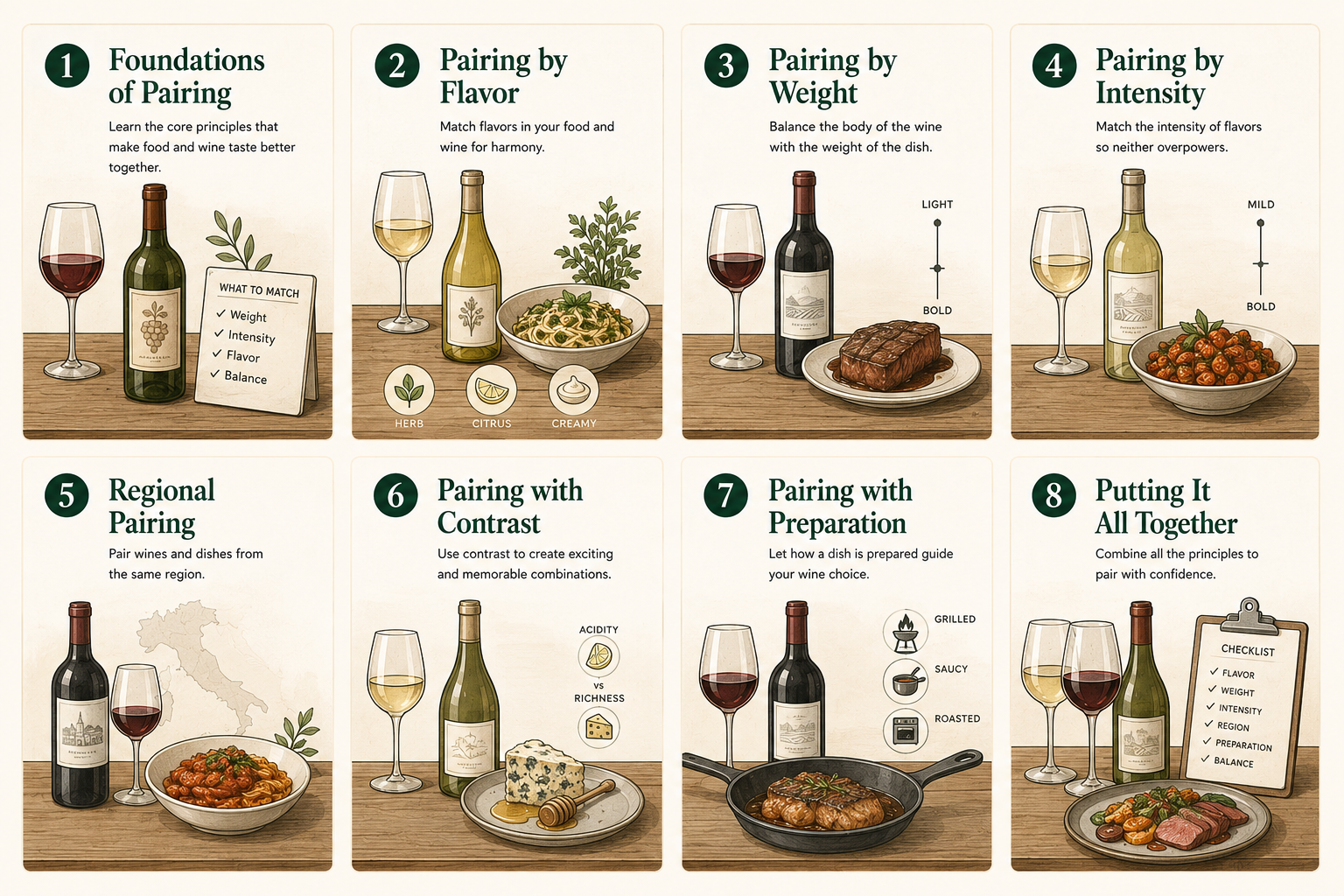
Lo que aprenderás
Each lesson is short and focused. Take them in order, or jump to the one that interests you.
Name the job first
Pairing gets easier when you stop asking what wine goes with the dish and start asking what job the wine has to do. Find the dominant trait first: fat, salt, acid, heat, sweetness, smoke, or sauce weight. Once the job is named, the bottle options narrow fast.
Acid cuts fat
Fat makes food satisfying, but it can also make the palate feel coated. Acid is the clean-up crew. High-acid whites, dry sparkling wines, and some lighter reds can make buttery, fried, cheesy, and creamy dishes feel lighter without fighting the food.
Tannin needs protein
Tannin is grip: the drying, firm feeling many red wines leave behind. Protein and fat make that grip feel smoother. Without enough food support, tannic wines can turn bitter, hard, or distracting, especially beside lean vegetables, delicate fish, or spicy dishes.
Sweetness vs heat
Spicy food changes the rules. Alcohol, oak, and heavy tannin can make heat feel louder, while a little sweetness can calm the dish. Dry wines still have a place, but they need freshness, modest weight, and restraint rather than brute force.
Complement or contrast
Every pairing choice is either a mirror or a counterweight. Complement means the wine echoes the dish. Contrast means it pushes against the dish. Both can work, but you should choose the philosophy on purpose instead of accidentally stacking too much of one thing.
The table, not the dish
Real meals rarely present one perfect pairing target. There is a salad, a sauce, a starch, a protein, and someone who wants a second glass. The better move is to pair for the whole table, not the imaginary single hero ingredient.
Wine-list strategy
A restaurant list can feel like a test, but it is really a map of choices. Start with the meal, choose a style lane, use the server well, and avoid hunting for a famous name when a better-fitting bottle may be quieter.
When no rule fits
Sometimes the dish is complicated, the table is split, or the list is strange. When the normal rules do not produce an answer, use a fallback sequence: dry sparkling first, then a medium-bodied red if the meal needs more weight.