Collecting Wine: Creating Your Own Home Wine List
 Por
Por - Cómo enfocar collecting wine: creating your own home wine list con confianza.
- Errores comunes y cómo evitarlos.
- Cuándo y cómo aplicarlo en situaciones reales.
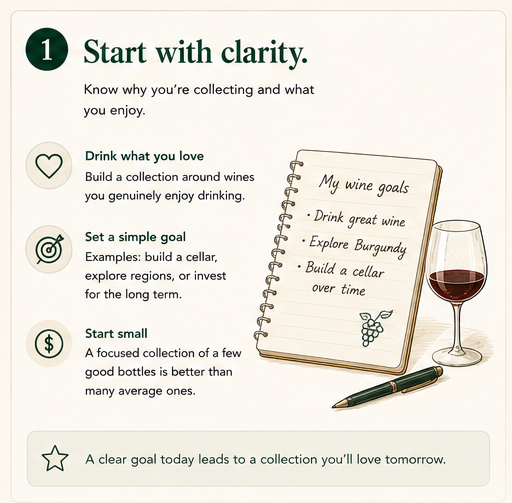
Start with clarity
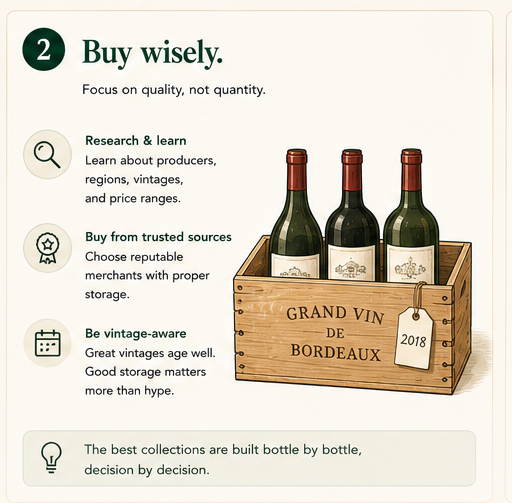
Buy wisely
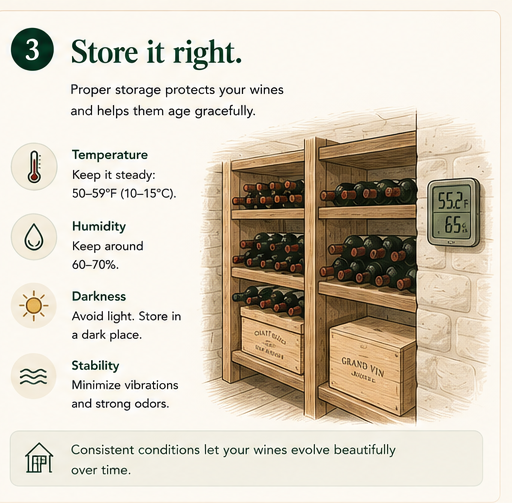
Store it right
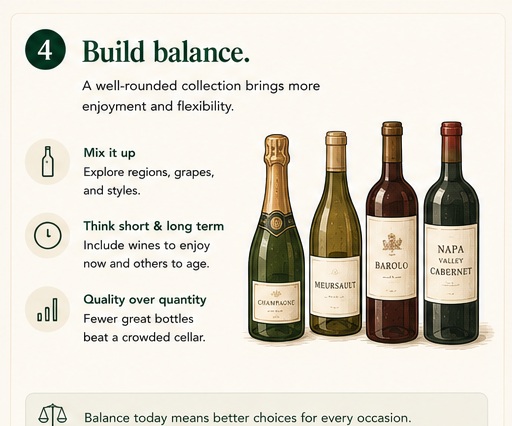
Build balance
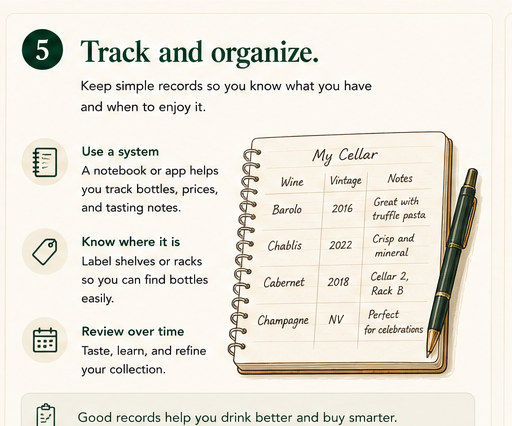
Track and organize
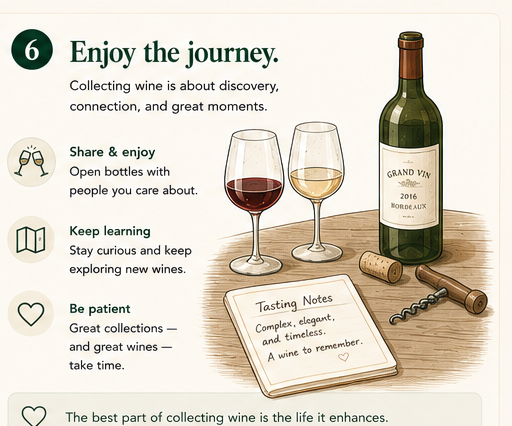
Enjoy the journey
Wine collecting doesn't require a cave, a fortune, or an advanced degree in oenology. At its most basic, it's about having the wines you want on hand when you want them. At its most refined, it's about aging wines thoughtfully and watching them evolve over time.
In 2010, a collection of 1870 Château d'Yquem — a legendary French dessert wine — sold for $117,000 per bottle at auction. That same year, a set of bottles salvaged from a nineteenth-century shipwreck fetched over $150,000 at auction. These are the extreme end of wine collecting. Most home collectors work with a very different scale and a very different goal: enjoying good wine at its best.
Starting Simple
The most practical approach to building a home wine list is to start with what you actually enjoy drinking. If you've had a wine you liked, taste more from the same producer or region. Explore different vintages. Ask the staff at a wine shop or your server at a restaurant what they recommend. Over time, you'll develop a sense of what you prefer and what's worth cellaring versus opening soon.
You don't need a dedicated cellar. A wine refrigerator or even a cool, dark closet with a consistent temperature is a reasonable starting point. The essentials are temperature stability, darkness, and keeping bottles on their sides so corks stay moist. You can read more about the specifics in our How to Store Wine guide.
What to Collect
Wines worth cellaring typically share certain characteristics: good acidity, firm tannins (for reds), high sugar (for sweet wines), or sufficient alcohol (for fortified wines). These elements preserve the wine and allow it to develop complexity over time.
If you're just starting, consider wines that are known to age well and are available at reasonable prices — certain Bordeaux, red Burgundy, Northern Rhône Syrah, Barolo, Rioja Reserva, and quality Riesling from Germany or Alsace all have proven track records for aging. Ask a knowledgeable wine merchant about specific vintages, since the year of harvest makes a meaningful difference in a wine's potential.
Keeping Track
Even a modest collection benefits from a simple inventory. A notebook or spreadsheet recording the producer, vintage, appellation, number of bottles, where they're stored, and any notes about when to open them gives you a useful reference and helps you avoid drinking wines before they're ready — or forgetting about them until they're past their best.

Stuck on something?
Five free questions, no jargon. Scott can answer your specific question about this lesson.
Hazle una pregunta a Scott →