How to Taste Wine Flavors
 Por
Por 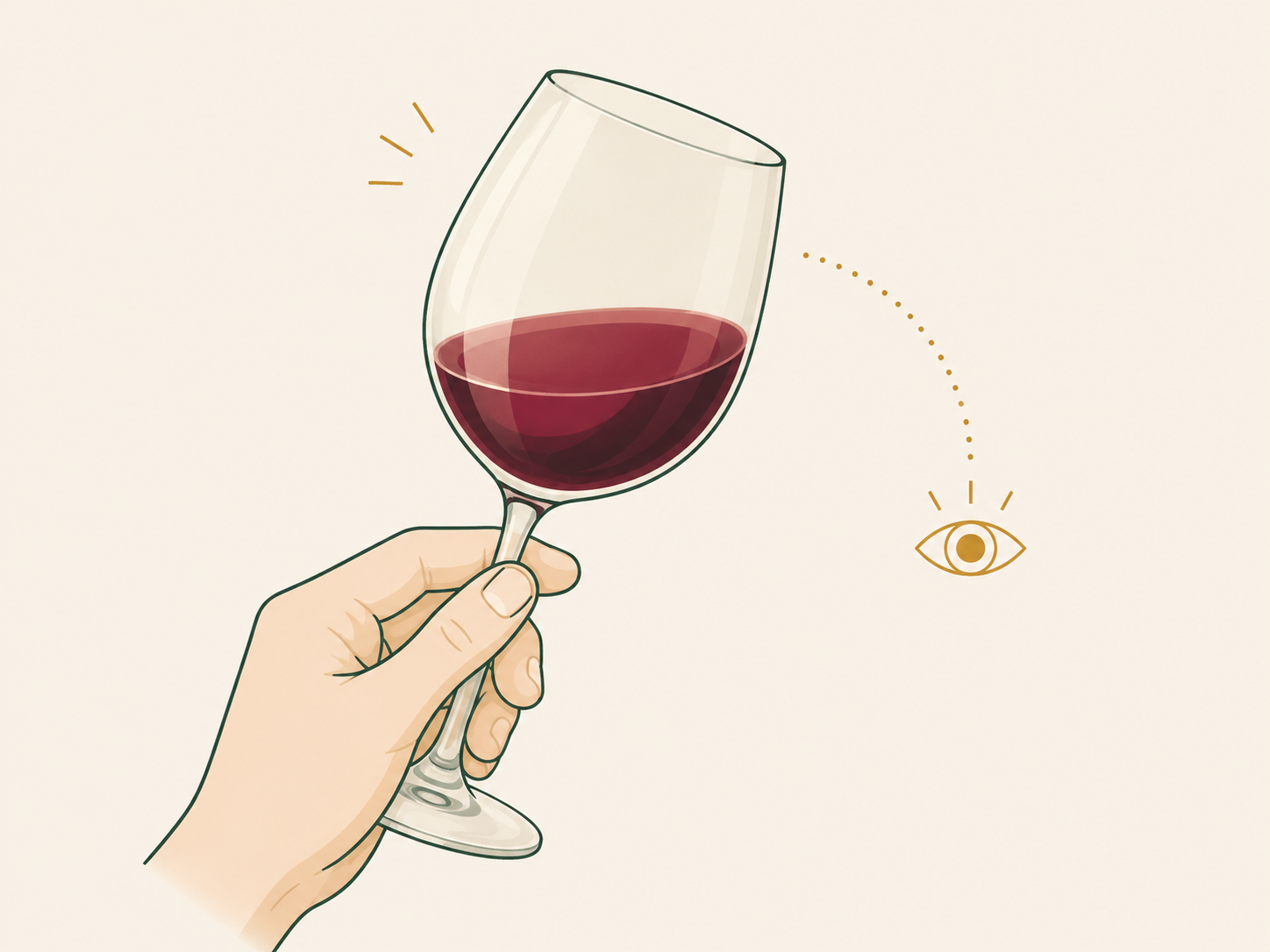
Step 1 look at the wine
Step 2 smell before you sip
Step 3 find the fruit family
Step 4 taste and check structure
Step 5 separate flavor from texture
Step 6 look for non fruit flavors
Step 7 where flavor comes from
Step 8 build a tasting note
Step 9 use your own words
Step 10 know when something is wrong
Learn how to identify wine flavors without feeling intimidated. This step-by-step guide teaches beginners how to notice fruit, oak, spice, earth, sweetness, acidity, tannin, and common wine faults.
You do not need special talent to taste wine.
You just need to slow down and ask a few simple questions.
This guide walks you through ten steps for identifying wine flavors, from looking at the glass to recognizing when something might be wrong.
Step 1: Look at the Wine
Before smelling or tasting, look at the wine. Is it white, rosé, red, orange, sparkling, or dessert? Is the color pale, medium, or deep? Does it look bright and fresh, or darker and more developed?
Color does not tell you everything, but it can set expectations.
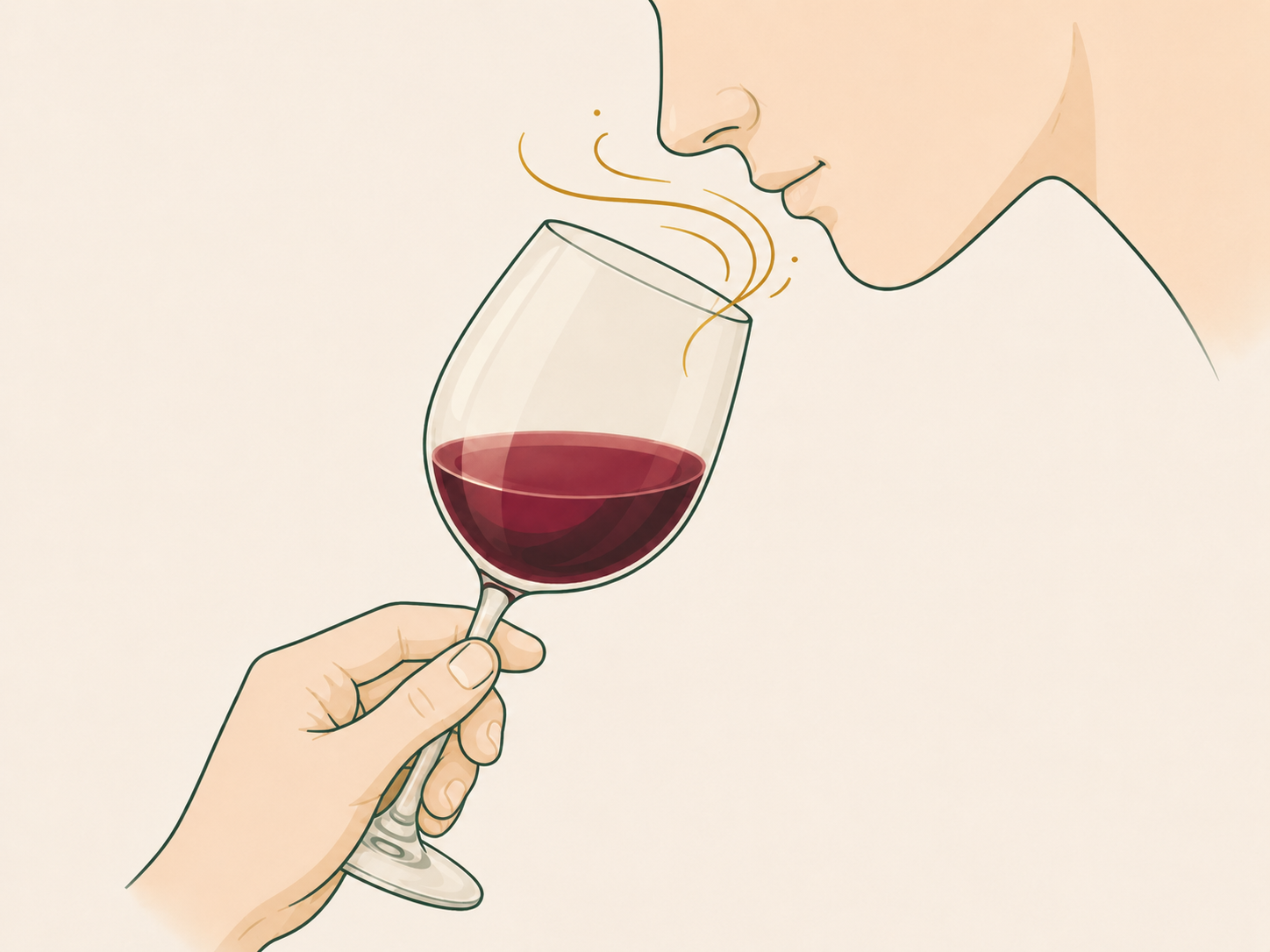
Step 2: Smell Before You Sip
Most of what people call flavor actually comes from smell. Swirl the glass gently. Then smell the wine. Ask broadly: Is it fruity? Floral? Herbal? Spicy? Earthy? Oaky? Creamy? Smoky?
Start broad, then narrow it down.
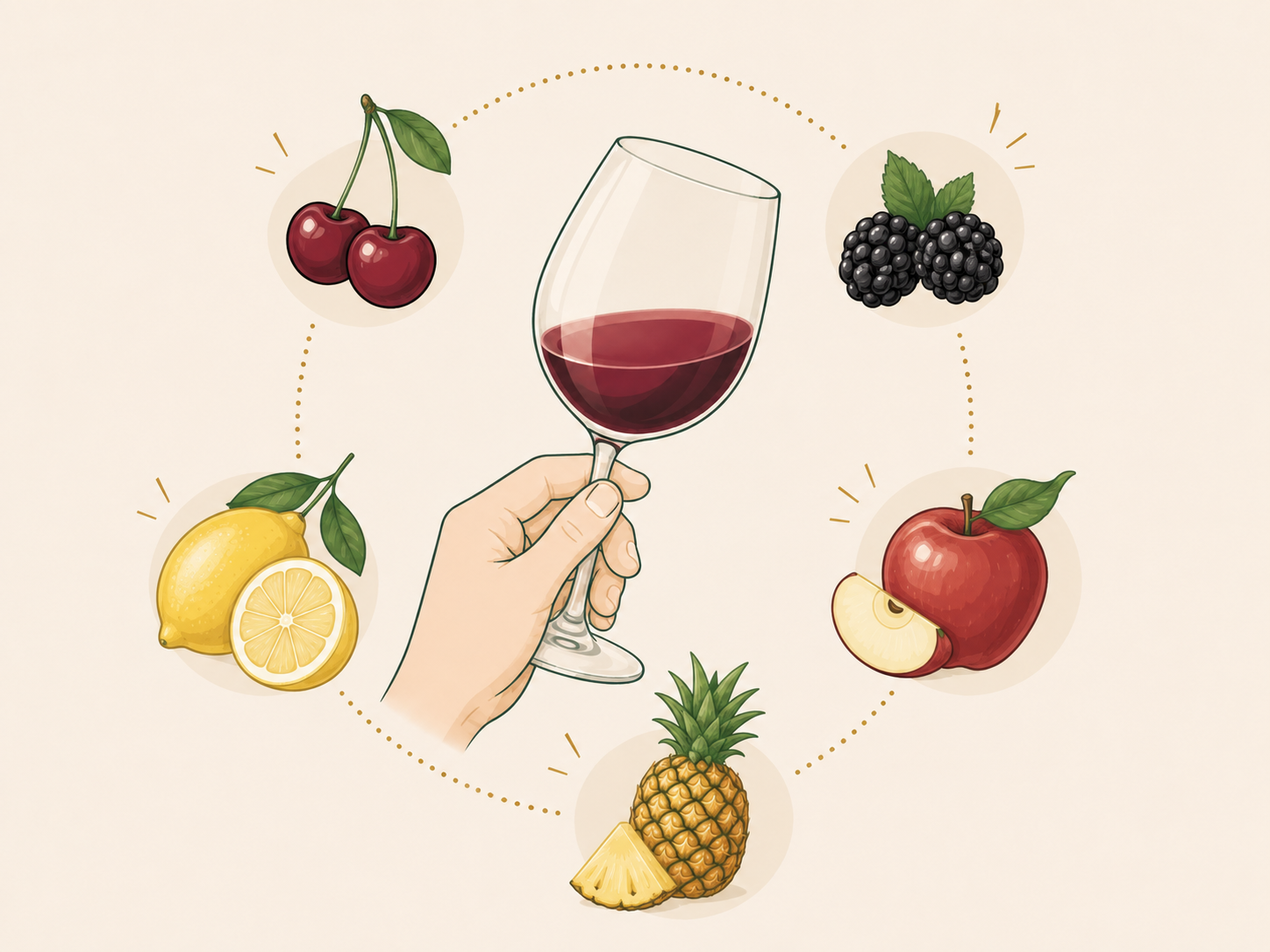
Step 3: Find the Fruit Family
Fruit is the easiest entry point for most beginners. Use broad families first: red fruit, black fruit, citrus, tree fruit, stone fruit, tropical fruit. You do not need to name a specific variety.
“Fresh red fruit” is a perfectly useful tasting note.
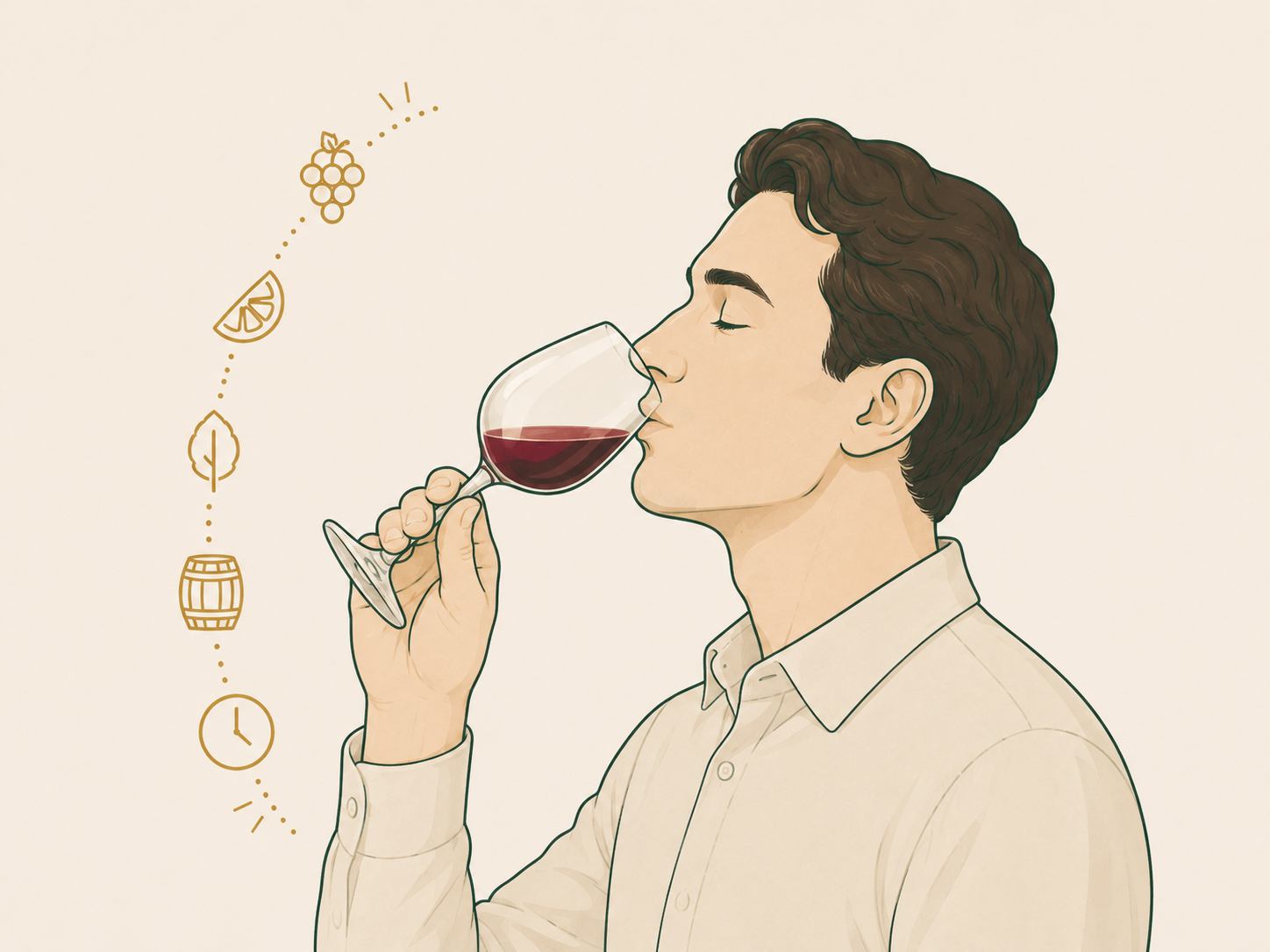
Step 4: Taste and Check Structure
Take a sip. Let the wine move around your mouth for a few seconds. Pay attention to structure: Is it dry or sweet? Is the acidity low, medium, or high? Are there tannins? Is the body light, medium, or full?
Structure changes how flavor feels.
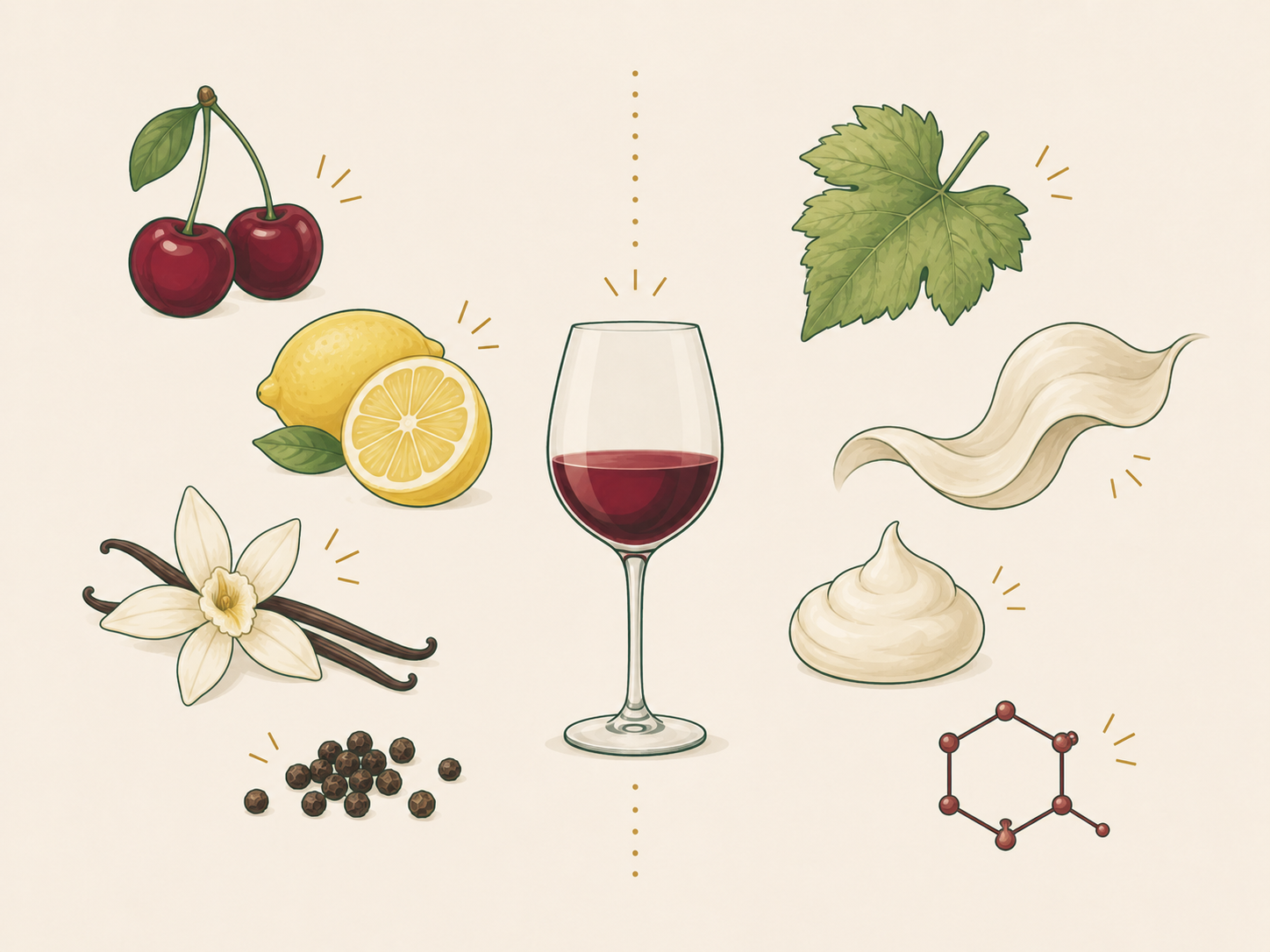
Step 5: Separate Flavor from Texture
A wine can taste like blackberry but feel dry and tannic. A wine can taste like lemon but feel creamy. A wine can smell sweet but taste dry. Flavor and texture are different dimensions.
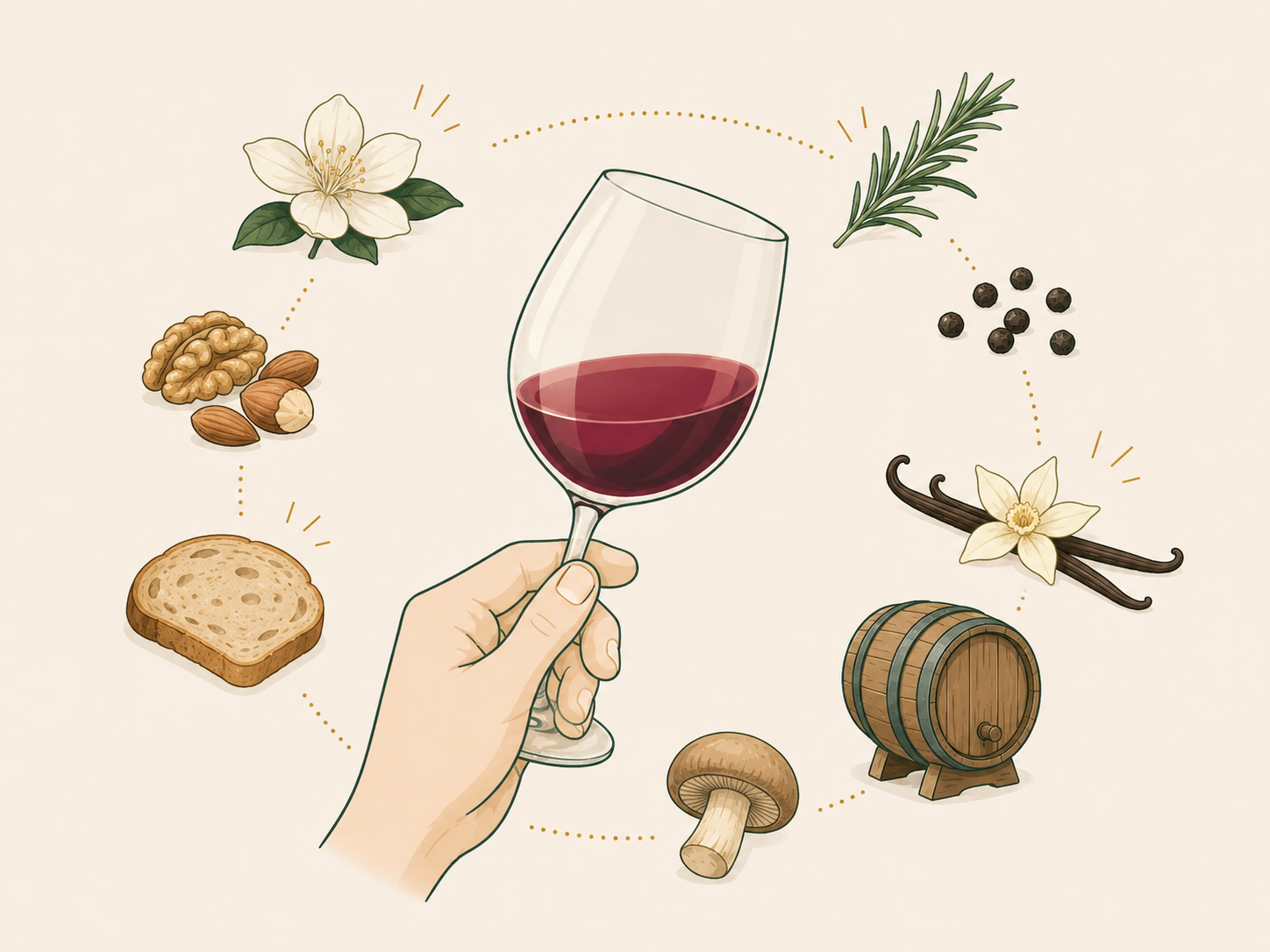
Step 6: Look for Non-Fruit Flavors
After fruit, check other flavor families: floral (rose, violet, lavender), herbal or green (mint, grass, green pepper), spice (black pepper, cinnamon, clove, licorice), oak (vanilla, toast, cedar, smoke), creamy or buttery (malolactic fermentation), earthy (mushroom, wet leaves, soil), savory (olive, leather, tobacco, dried herbs), nutty (almonds, hazelnuts, from aging or oxidation).
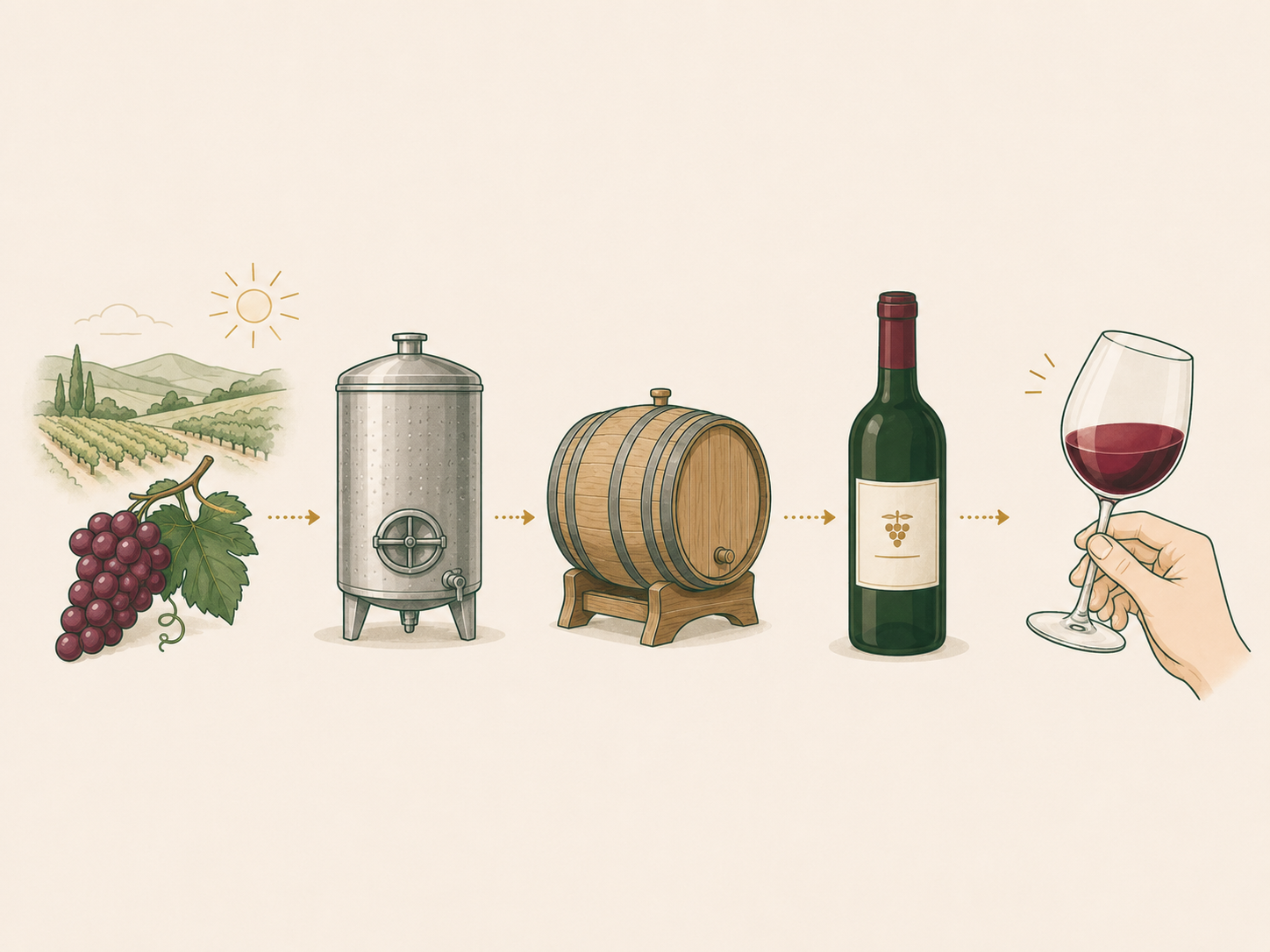
Step 7: Ask Where the Flavor Comes From
The grape variety contributes fruit, flowers, herbs, and spice. Climate shapes ripeness. Fermentation adds bread, yogurt, and floral notes. Oak aging adds vanilla, toast, and spice. Bottle aging adds leather, tobacco, dried fruit, and earthiness. Oxidation can add nuttiness or flat aromas. Faults add off-notes.
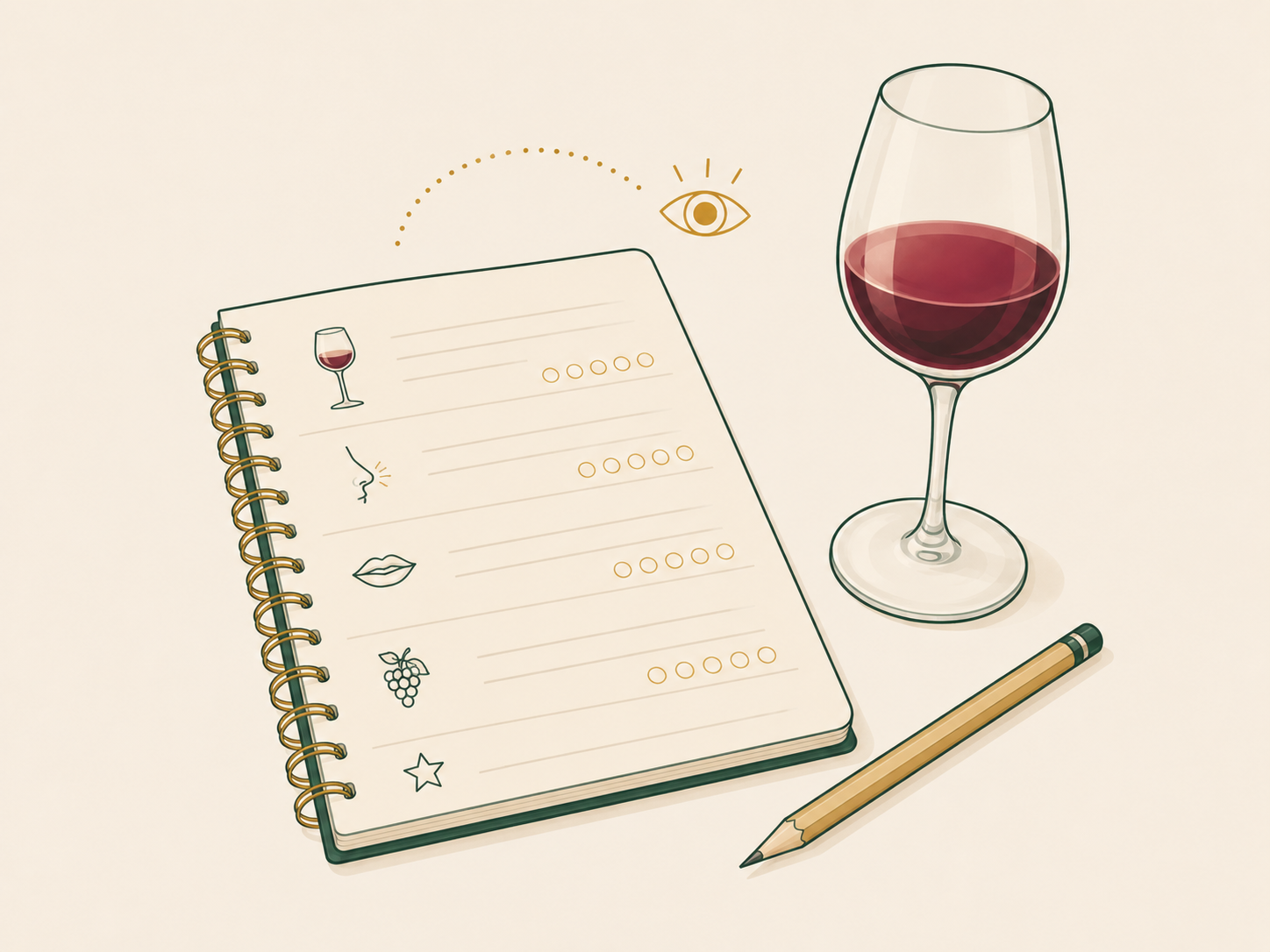
Step 8: Build a Tasting Note
Try this format: This wine is [structure] with flavors of [fruit] plus [non-fruit notes]. It feels [texture] and finishes [finish].
Example: This wine is dry and medium-bodied, with flavors of cherry, raspberry, and a little black pepper. It feels bright and smooth, with a fresh finish.
Step 9: Use Your Own Words
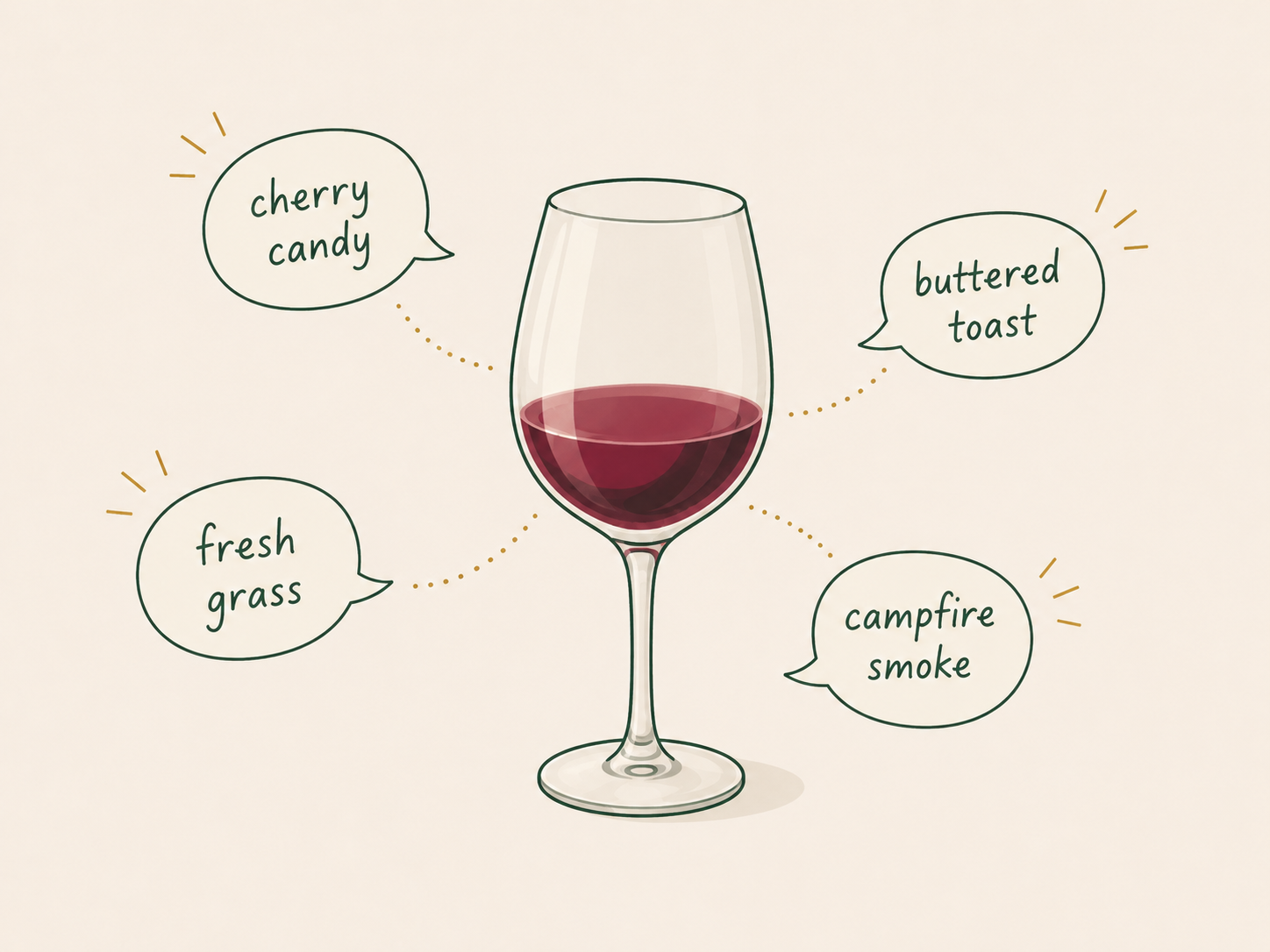
Formal wine language is useful, but personal language is memorable. If a wine reminds you of cherry candy, buttered toast, campfire smoke, or your grandmother’s spice cabinet, that is a real tasting note.
Your words work as long as they help you remember the wine.
Step 10: Know When Something Might Be Wrong
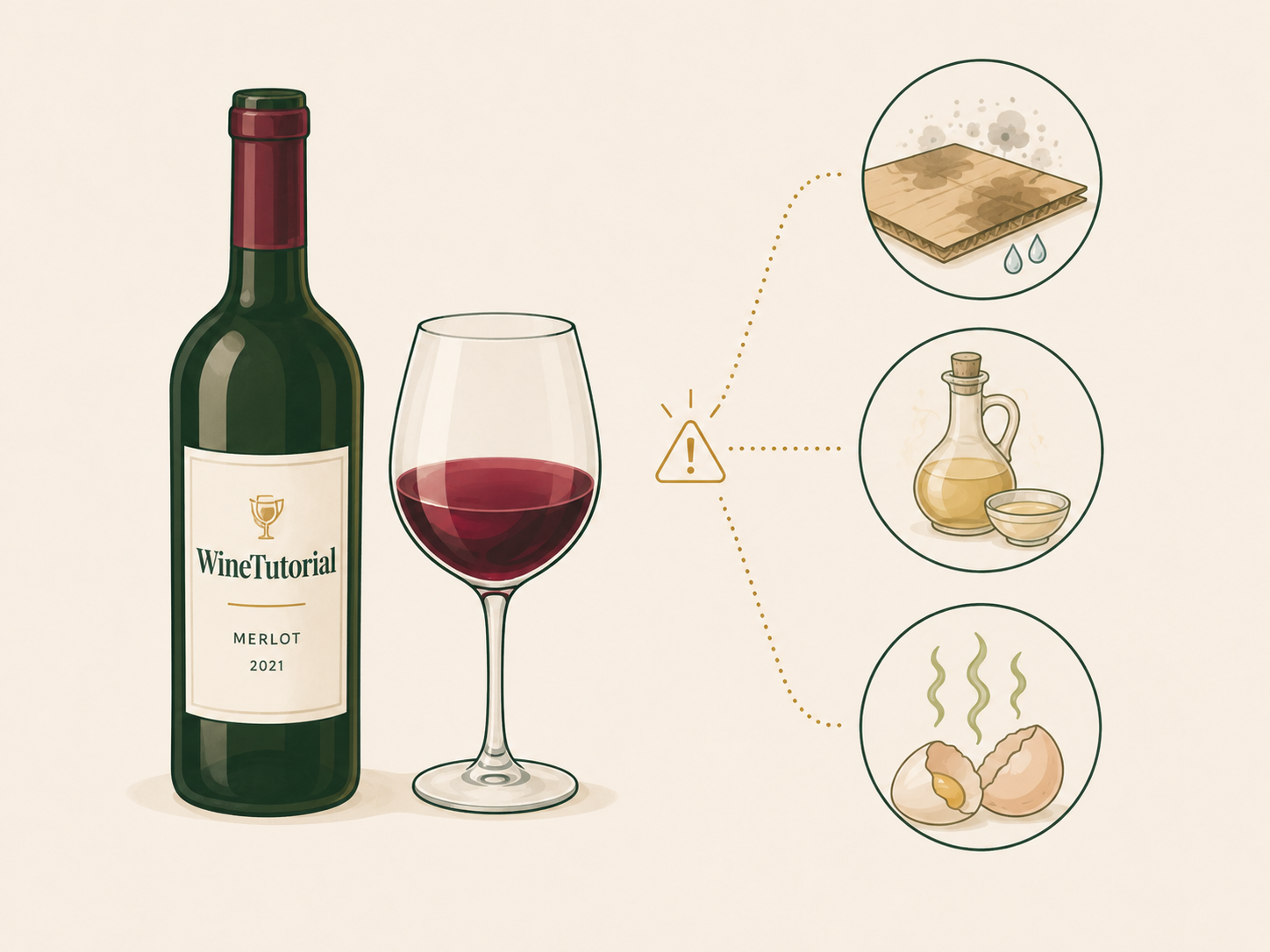
Not every strange flavor is a fault. But some aromas suggest a problem: wet cardboard or damp cellar (cork taint), vinegar or nail polish (volatile acidity), rotten egg or rubber (reduction), cooked or stewed fruit (heat damage), barnyard or bandage (excess Brettanomyces).
If a wine smells strongly of mold, vinegar, or rotten egg, it is reasonable to ask someone to check the bottle.
The Short Version
Wine tasting gets easier when you stop trying to be right and start trying to be specific. Start with what you notice. Name it in your own words. Then ask what might have created it.
That is how you learn to identify wine flavors.